According to the American Heart Association, adults need at least 150 minutes of moderate-intensity physical activity and two days of muscle-strengthening activity each week. When you exercise, you likely make a point to do so safely to avoid certain side effects; you practice good form while lifting weights, don’t run so far that you hurt your knees, etc. One side effect of working out that is less common but still possible is a ringing in the ears—also called tinnitus.
How Can Working Out Cause Tinnitus?
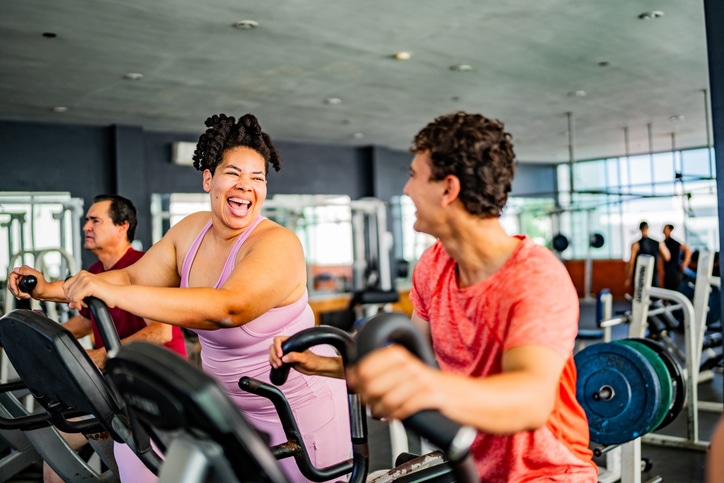
There are a few things that can cause tinnitus during or after a workout:
- Increased heart rate. Some tinnitus arises when your blood starts pumping faster, which increases pressure in your inner ear. An elevated heart rate will likely cause a pulsing or whooshing noise, rather than a ringing.
- Loud noise exposure. Blasting your music during a workout at SLS Fitness or standing too close to clanking weights can stress your inner ear and cause temporary tinnitus.
- Clenching your jaw. Pain in your temporomandibular joint (TMJ) can radiate to your ears. People with TMJ conditions often experience tinnitus. If you clench your jaw while working out, likely when you’re straining to complete a difficult exercise, you may trigger ringing in your ears.
While less likely, cranial pressure or a perilymphatic fistula, a small tear in the membrane between your middle and inner ear, can also cause tinnitus during or after a workout.
When Does Tinnitus Require Professional Help?
Short-term tinnitus is usually not a big deal. That said, you should limit behaviors that cause it. You don’t need to stop doing cardio exercises, but lowering the volume on your music and relaxing your face and jaw during your workouts can help reduce the chance of tinnitus.
If tinnitus occurs independently of your workouts, lasts more than five minutes at a time, or is accompanied by hearing issues, contact Massachusetts Hearing Group to schedule an evaluation with one of our specialists.
Sources
American Heart Associattion. (2024). American Heart Association recommendations for physical activity in adults and kids. Www.Heart.Org. https://www.heart.org/en/healthy-living/exercise-and-physical-activity/fitness-basics/aha-recs-for-physical-activity-in-adults
Edvall, N. K., Gunan, E., Genitsaridi, E., Lazar, A., Mehraei, G., Billing, M., Tullberg, M., Bulla, J., Whitton, J., Canlon, B., Hall, D. A., & Cederroth, C. R. (2019). Impact of Temporomandibular Joint Complaints on Tinnitus-Related Distress. Frontiers in neuroscience, 13, 879. https://doi.org/10.3389/fnins.2019.00879
Idiopathic intracranial hypertension: Symptoms, causes & treatment. (2021, October 18). Cleveland Clinic. https://my.clevelandclinic.org/health/diseases/21968-idiopathic-intracranial-hypertension
Perilymphatic fistula (PLF): Radiology, symptoms & treatment. (2022). Cleveland Clinic. https://my.clevelandclinic.org/health/diseases/22383-perilymphatic-fistula